
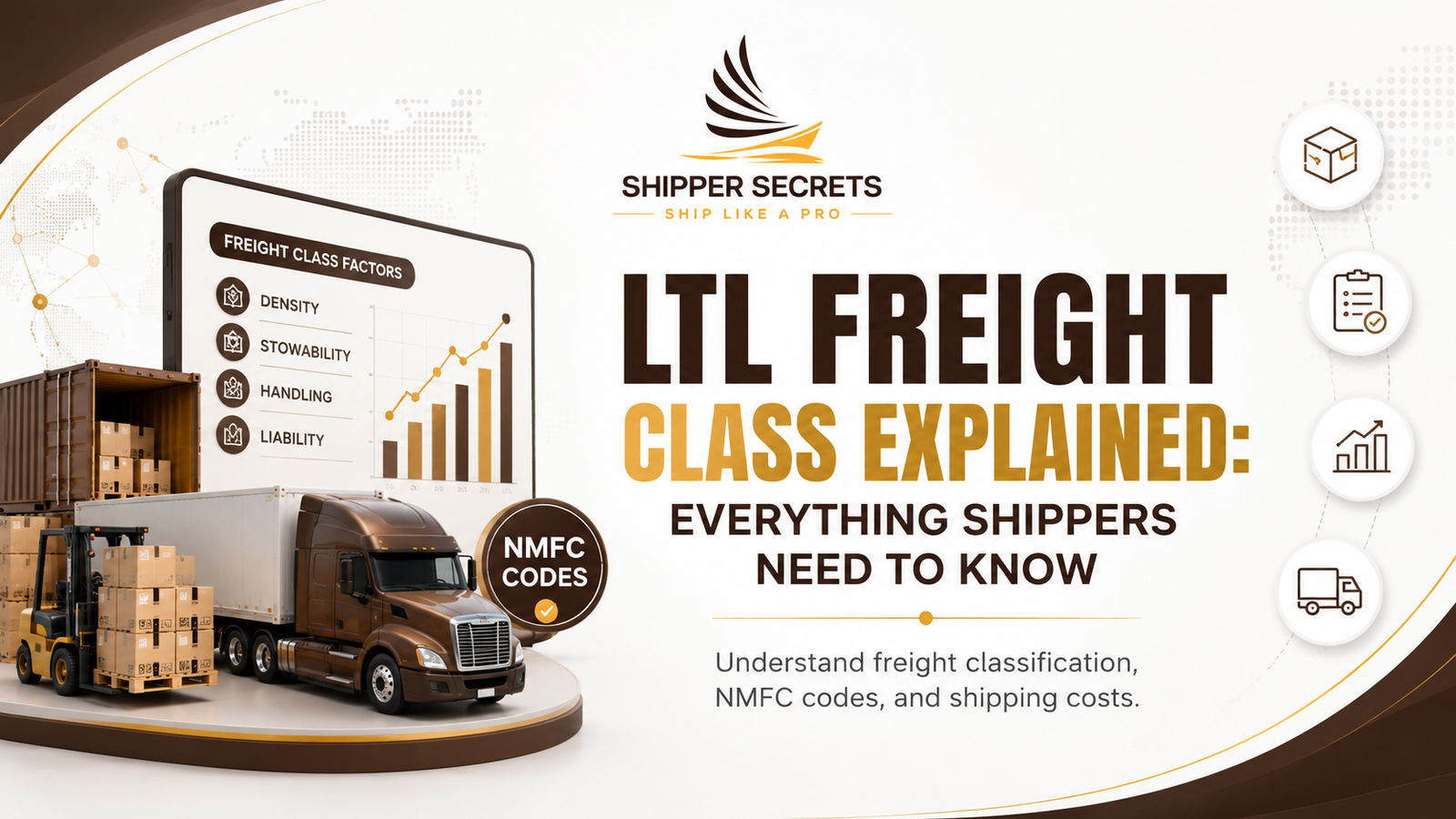
When shipping freight through a less-than-truckload network, understanding LTL Freight classification is essential. Freight class directly affects shipping rates, carrier selection, handling requirements and potential liability. An incorrect freight class can lead to unexpected fees, shipment delays and billing disputes.
Whether you’re new to freight shipping or looking to improve your logistics processes, understanding freight classification can help you reduce costs and avoid common mistakes.
What Is an LTL Freight Class?
An LTL freight class is a standardized system used by carriers to determine shipping rates for less-than-truckload shipments. The system was created by the National Motor Freight Traffic Association (NMFTA) and is based on National Motor Freight Classification (NMFC) guidelines.
Freight classes range from Class 50 to Class 500. Lower classes are typically assigned to dense, durable products that are easy to transport, while higher classes are assigned to lightweight, fragile or difficult-to-handle items.
The freight class assigned to your shipment plays a major role in determining the overall cost of transportation.
Why Freight Class Matters
Freight classification helps carriers evaluate how a shipment should be handled and priced. It provides a consistent method for assessing transportation requirements across the industry.
Accurate freight classification helps:
- Generate correct shipping rates
- Improve trailer space utilization
- Reduce billing disputes
- Minimize reclassification charges
- Ensure efficient freight handling
- Improve shipment planning and logistics management
For shippers, proper classification helps maintain accurate budgets and prevents unexpected transportation costs.
Understanding Freight Class Numbers
The NMFC system includes 18 freight classes ranging from 50 to 500.
Generally speaking:
- Lower freight classes are less expensive to ship.
- Higher freight classes typically cost more.
- Dense products often receive lower classifications.
- Lightweight or bulky items generally receive higher classifications.
Examples of lower-class freight may include industrial machinery, metal products or dense construction materials. Higher-class freight often includes furniture, electronics or lightweight consumer products.
The Four Factors That Determine Freight Class
Density
Density is one of the most important factors in freight classification. It measures how much a shipment weighs compared to the space it occupies.
Freight that is compact and heavy generally receives a lower freight class, while lightweight products that occupy significant trailer space usually receive a higher class.
Accurate dimensions and weight measurements are critical for determining density correctly.
Stowability
Stowability refers to how easily freight can be stored and transported alongside other shipments.
Freight that can be stacked efficiently and fits well within a trailer is easier to transport. Shipments that are oversized, oddly shaped or require separation from other freight may receive a higher classification.
Handling
Some products are easier to load, unload and move than others.
Fragile, hazardous, oversized or irregularly shaped shipments often require special handling procedures. Additional handling requirements generally result in higher freight classifications.
Liability
Liability considers the overall risk associated with transporting a shipment.
Factors that influence liability include:
- Product value
- Risk of theft
- Fragility
- Potential damage to other freight
- Special security requirements
Higher-risk shipments are often assigned higher freight classes because they represent greater responsibility for carriers.
What Are NMFC Codes?
NMFC codes are standardized identification numbers assigned to specific products and commodities. These codes help carriers determine the correct freight class based on the characteristics of the shipment.
Each commodity has unique transportation requirements and NMFC codes provide a consistent method for classification across the freight industry.
Using the correct NMFC code helps ensure accurate pricing and reduces the likelihood of carrier reclassification.
How Freight Class Affects LTL Shipping Rates
Freight class has a direct impact on shipping costs.
When carriers calculate rates, they consider how much space the shipment occupies, how difficult it is to handle and the level of risk involved in transportation.
Lower freight classes generally result in lower shipping costs because the freight is easier and more efficient to transport.
Higher freight classes often lead to increased transportation expenses due to additional handling requirements, lower density or greater liability concerns.
Even a small classification error can significantly increase shipping costs over time.
Common Freight Classification Mistakes
Many businesses unintentionally pay more for transportation because of classification errors.
Some of the most common mistakes include:
Estimating Dimensions Instead of Measuring
Accurate dimensions are essential for calculating freight density. Estimating measurements often results in incorrect classifications.
Using Incorrect Shipment Weights
Freight carriers frequently verify shipment weights. Discrepancies can trigger additional fees and reclassification charges.
Selecting the Wrong NMFC Code
Using an incorrect NMFC code may result in inaccurate freight classes and billing adjustments.
Failing to Update Product Information
Changes in packaging, dimensions or product specifications can affect freight classification and should be reviewed regularly.
Tips for Accurate Freight Classification
To improve shipping accuracy and avoid unnecessary costs, consider the following best practices:
- Measure freight dimensions carefully.
- Weigh shipments using reliable equipment.
- Verify NMFC codes before shipping.
- Keep product specifications updated.
- Train employees on freight classification requirements.
- Review carrier invoices for classification discrepancies.
- Use freight management software to automate calculations where possible.
These practices can help minimize costly errors and improve overall shipping efficiency.
How Freight Audits Help Control Shipping Costs
Freight audits play an important role in verifying shipment classifications and identifying billing errors.
A thorough freight audit can help businesses:
- Detect incorrect freight classes
- Recover overcharges
- Improve invoice accuracy
- Strengthen carrier accountability
- Reduce long-term transportation expenses
Companies that regularly review freight invoices often uncover significant savings opportunities.
The Future of LTL Freight Classification
Technology is transforming the way freight is classified and managed.
Modern logistics solutions now include:
- Automated dimensioning systems
- Digital freight documentation
- AI-powered classification tools
- Real-time shipment verification
- Advanced transportation management systems
These innovations help shippers improve accuracy, reduce manual work and gain better visibility into freight operations.
Conclusion
Understanding LTL Freight classification is essential for managing transportation costs and avoiding unexpected charges. Freight class affects everything from pricing and handling requirements to carrier liability and shipment efficiency.
By learning how density, stowability, handling, liability and NMFC codes influence classification, businesses can make smarter shipping decisions and improve supply chain performance. Accurate freight classification not only helps reduce costs but also creates a more efficient and reliable shipping process for long-term success.
Frequently Asked Questions (FAQs)
1. What is an LTL freight class?
An LTL freight class is a standardized classification used by carriers to determine shipping rates for less-than-truckload shipments. It is based on factors such as density, handling, stowability and liability.
2. How does freight class affect LTL shipping costs?
Freight class directly impacts shipping rates. Lower freight classes typically cost less because they are easier to handle and transport, while higher freight classes generally result in higher shipping charges.
3. What factors determine an LTL freight class?
LTL freight class is determined by four primary factors: density, stowability, handling requirements and liability. These factors help carriers assess the cost and complexity of transporting a shipment.
4. What is an NMFC code in LTL freight shipping?
An NMFC (National Motor Freight Classification) code is a standardized code assigned to specific commodities. It helps carriers identify the correct freight class and calculate accurate shipping rates.
5. How can shippers avoid freight reclassification fees?
Shippers can avoid reclassification fees by accurately measuring dimensions, weighing shipments correctly, using the proper NMFC code and ensuring all shipment details are provided correctly before pickup.
📞 Contact Us
📍 868 Cardiff Road, Naperville, IL 60565
📞 708.275.8418
🌐 Get in touch with our logistics experts for reliable shipping and freight solutions. 🚚✈️📦