
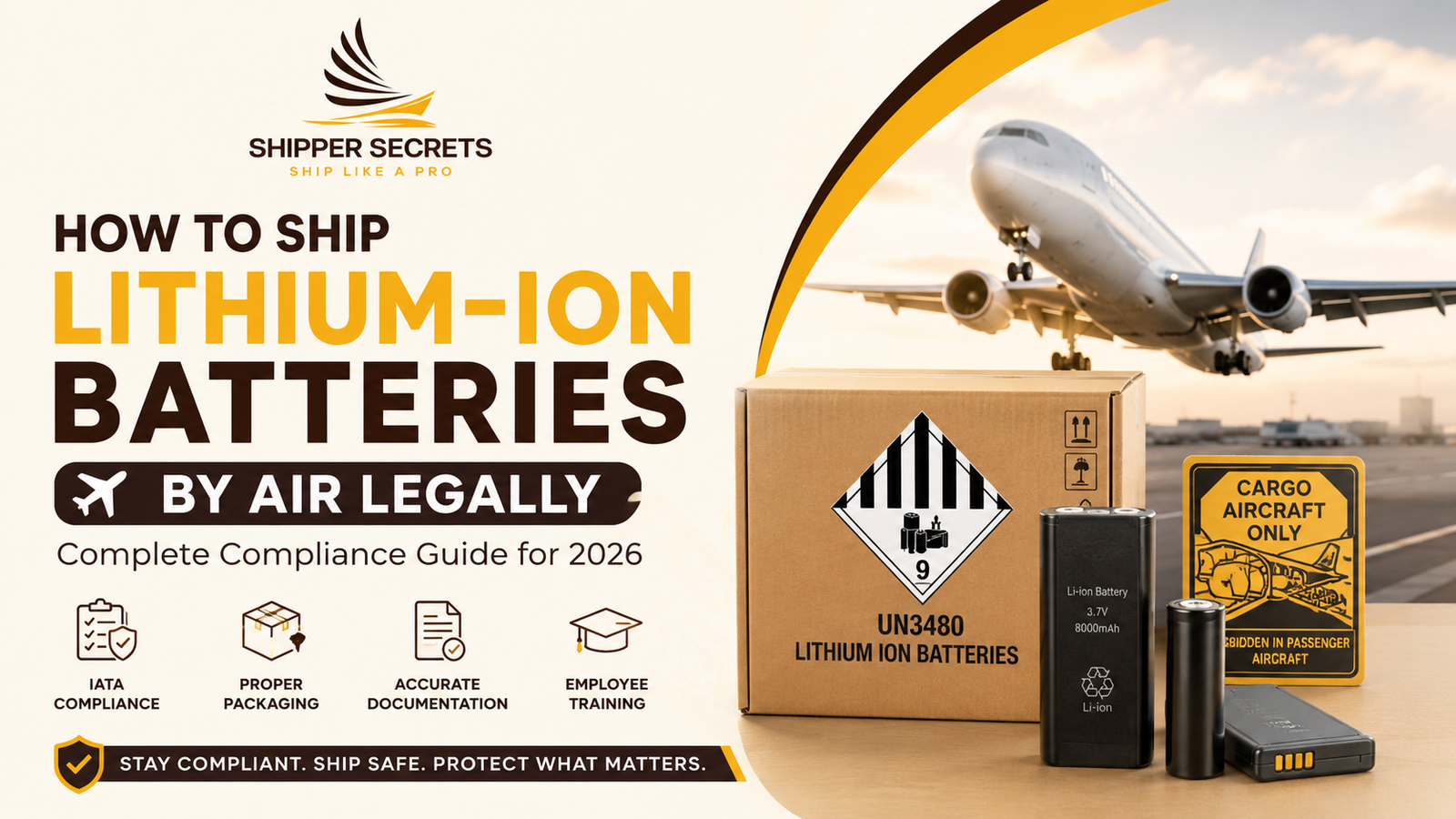
Shipping lithium-ion batteries by air is one of the most heavily regulated aspects of global logistics. As the demand for electric vehicles, consumer electronics, medical devices, drones, and industrial equipment continues to grow, businesses must ensure every shipment complies with international air transport regulations.
Failure to comply can lead to shipment rejection, substantial fines, cargo delays, damaged business relationships, and even aircraft safety incidents.
This comprehensive guide explains everything businesses need to know about legally shipping lithium-ion batteries by air in 2026.
Why Lithium-Ion Batteries Are Regulated
Lithium-ion batteries are classified as Dangerous Goods (Class 9) because they can generate excessive heat, ignite, or experience thermal runaway if damaged, improperly packaged, or exposed to short circuits.
During air transportation, changes in pressure, temperature, and cargo handling increase these risks, making strict compliance essential.
International regulations are designed to:
- Protect aircraft and crew
- Reduce fire risks
- Ensure safe transportation
- Standardize global shipping practices
- Protect logistics providers from liability
Which Regulations Govern Air Shipment?
Businesses shipping lithium batteries by air must comply with:
- IATA Dangerous Goods Regulations (DGR)
- ICAO Technical Instructions
- Airline-specific requirements
- Local transportation regulations
- Customs documentation requirements
For most commercial shippers, IATA Dangerous Goods Regulations are the primary standard used worldwide.
Types of Lithium Battery Shipments
Before shipping, identify the battery configuration.
1. Lithium-Ion Batteries Shipped Alone
UN3480
Examples:
- Replacement batteries
- Bulk battery shipments
- Warehouse inventory transfers
These shipments have the strictest requirements.
2. Lithium-Ion Batteries Packed with Equipment
UN3481
Examples:
- Laptop with spare battery
- Medical device with removable battery
- Industrial equipment
3. Lithium-Ion Batteries Contained in Equipment
UN3481
Examples:
- Smartphones
- Tablets
- Cameras
- Power tools
- Electric devices
Generally easier to ship but still regulated.
Step 1: Determine the Battery’s Watt-Hour (Wh) Rating
Before shipping a lithium-ion battery by air, you must identify its Watt-hour (Wh) rating, as this determines which IATA regulations apply. Most smartphones typically contain batteries between 10 and 20 Wh, laptops generally range from 40 to 90 Wh, while power tools and drones often use larger batteries. High-capacity batteries, such as those used in electric bicycles or industrial equipment, are subject to stricter packaging, documentation, and transport requirements. Always verify the battery’s Wh rating from the manufacturer’s specifications before preparing the shipment.
Step 2: Verify State of Charge (SOC)
For many lithium-ion batteries shipped by air:
- Maximum 30% State of Charge
- Batteries should be tested
- Follow manufacturer recommendations
- Verify before packaging
This reduces fire risk during transport.
Step 3: Use UN-Tested Packaging
Packaging is one of the most important compliance requirements.
Packaging should:
- Prevent movement
- Protect against damage
- Prevent short circuits
- Withstand vibration
- Meet UN performance standards
- Pass required testing
Improper packaging is one of the leading reasons shipments are rejected.
Step 4: Prevent Short Circuits
Each battery terminal must be protected.
Methods include:
- Terminal caps
- Non-conductive tape
- Individual plastic bags
- Protective trays
- Foam separators
Never allow batteries to contact metal objects.
Step 5: Apply Correct Labels
Air shipments typically require:
- Class 9 Lithium Battery Label
- Cargo Aircraft Only Label (when applicable)
- Lithium Battery Mark
- Orientation arrows (when required)
- Handling instructions
Incorrect labeling frequently causes shipment delays.
Step 6: Complete Dangerous Goods Documentation
Documentation may include:
- Shipper’s Declaration for Dangerous Goods
- Air Waybill
- Commercial Invoice
- Packing List
- Emergency Contact Information
Errors in paperwork are among the most common causes of shipment rejection.
Step 7: Train Employees
Anyone involved in:
- Packaging
- Documentation
- Warehouse operations
- Freight forwarding
- Shipping
- Compliance
must receive proper dangerous goods training.
Regular refresher training helps organizations remain compliant with changing regulations.
Common Mistakes That Lead to Shipment Rejection
Many shipments fail because of avoidable mistakes.
The most common include:
- Incorrect UN number
- Missing battery labels
- Poor packaging
- Batteries shipped at excessive charge
- Incorrect documentation
- Missing dangerous goods declaration
- Untrained shipping staff
- Improper battery classification
- Damaged batteries included in shipment
- Airline-specific rules ignored
Industries That Frequently Ship Lithium Batteries
Many sectors rely on compliant battery transportation.
These include:
- Consumer Electronics
- Medical Equipment
- Aerospace
- Automotive
- Electric Vehicle Manufacturers
- E-commerce
- Telecommunications
- Renewable Energy
- Industrial Equipment
- Defense Contractors
Benefits of Following Air Shipping Regulations
Legal compliance offers significant business advantages.
These include:
Improved Safety
Reduces risks during transportation.
Faster Customs Clearance
Proper documentation minimizes delays.
Reduced Shipment Rejections
Correct packaging helps shipments move efficiently.
Lower Financial Risk
Avoid expensive penalties and damaged goods.
Better Customer Satisfaction
Reliable deliveries improve customer trust.
Stronger Business Reputation
Compliance demonstrates professionalism.
Best Practices for Shipping Lithium-Ion Batteries
Develop a standardized shipping process.
Recommended practices include:
- Maintain updated shipping procedures
- Audit packaging regularly
- Train employees annually
- Stay current with IATA updates
- Verify battery specifications
- Use certified packaging suppliers
- Maintain documentation records
- Conduct internal compliance reviews
- Work with experienced logistics partners
Why Professional Training Matters
Lithium battery regulations change frequently. Businesses that rely on outdated procedures expose themselves to unnecessary risk.
Professional DOT, IATA, and IMDG Lithium Battery Training helps teams understand:
- Battery classification
- Packaging requirements
- Documentation
- Labeling
- Air transport restrictions
- Regulatory updates
- Emergency response procedures
- Compliance responsibilities
Well-trained employees reduce shipping errors, improve operational efficiency, and help organizations remain compliant with international regulations.
Partner with Shipper Secrets for Lithium Battery Shipping Training
At Shipper Secrets, we provide industry-recognized DOT, IATA, and IMDG Lithium Battery Training designed for logistics professionals, freight forwarders, warehouse teams, manufacturers, distributors, and compliance managers.
Our training programs help organizations confidently navigate complex dangerous goods regulations while reducing shipping risks and ensuring full regulatory compliance.
Whether you’re shipping batteries domestically or internationally, our expert-led courses equip your team with the knowledge needed to ship lithium-ion batteries by air safely and legally.
Frequently Asked Questions (FAQs)
1. Can lithium-ion batteries be shipped by air?
Yes. Lithium-ion batteries can be shipped by air if they comply with IATA Dangerous Goods Regulations, including proper packaging, labeling, documentation, and training requirements.
2. What UN number is used for lithium-ion batteries?
- UN3480 – Lithium-ion batteries shipped alone
- UN3481 – Lithium-ion batteries packed with or contained in equipment
3. Is training required for shipping lithium batteries by air?
Yes. Employees involved in preparing, packaging, labeling, documenting, or offering lithium battery shipments must receive appropriate dangerous goods training.
4. Why are lithium-ion batteries considered dangerous goods?
Lithium-ion batteries can overheat, short-circuit, or enter thermal runaway if damaged or improperly handled, creating a potential fire hazard during air transport.
5. What happens if a shipment doesn’t comply with IATA regulations?
Non-compliant shipments may be rejected, delayed, fined, or subject to enforcement actions. Improperly prepared shipments can also pose significant safety risks.
📞 Contact Us
📍 868 Cardiff Road, Naperville, IL 60565
📞 708.275.8418
🌐 Get in touch with our logistics experts for reliable shipping and freight solutions. 🚚✈️📦