
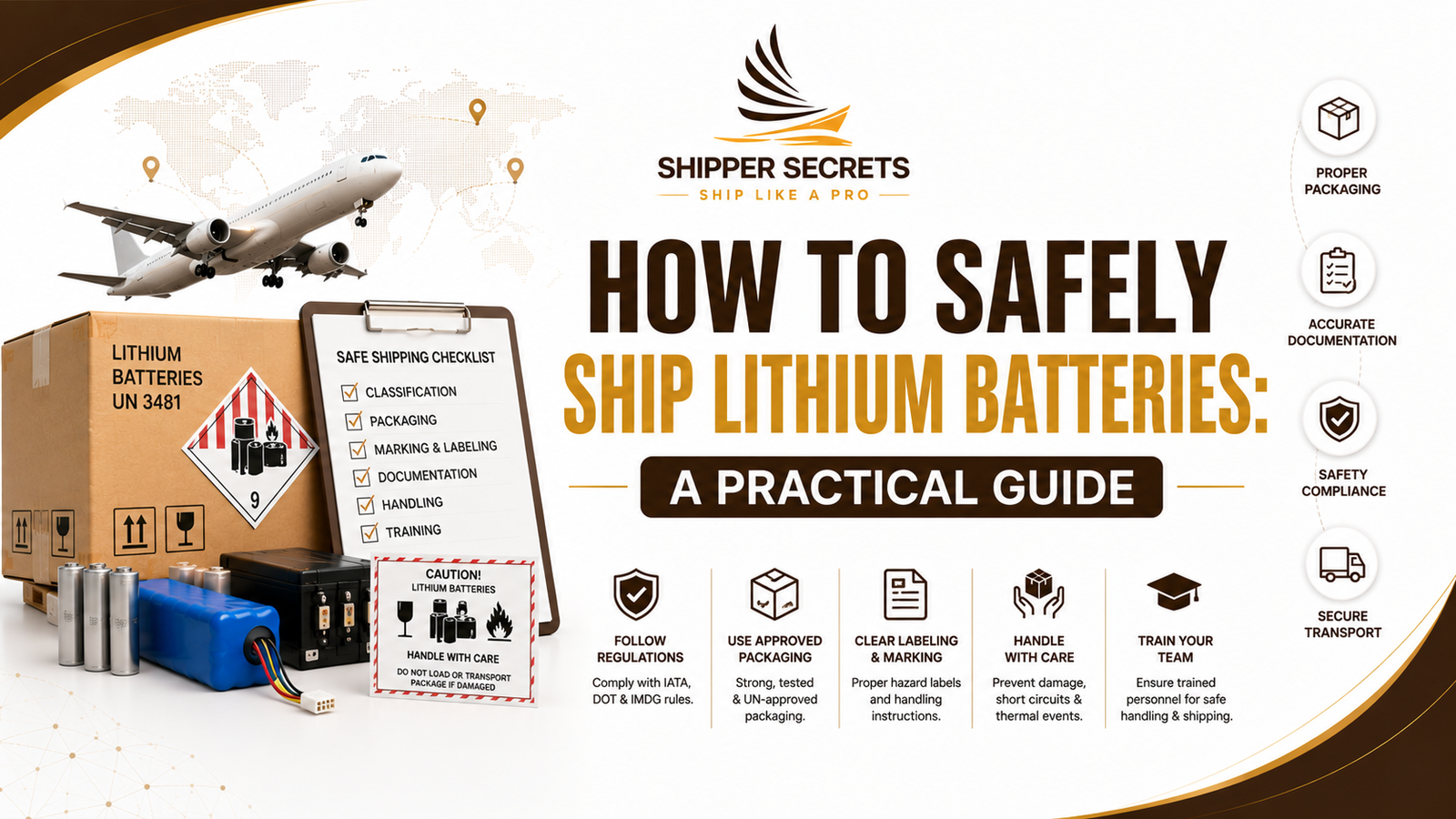
Shipping lithium batteries responsibly is one of those tasks that mixes common sense with a surprising amount of regulation. One wrong move can ground a shipment, damage property, or worse, cause a fire. This guide walks through the technical facts, paperwork, packing tricks, and real-world tips so you can move batteries with confidence.
I wrote this after years of coordinating product launches and moving replacements for electronics companies; I’ve stood in warehouses taping padding to fragile battery packs and argued with carriers over declarations. That experience shaped a practical, clear approach rather than a list of academic rules you’ll never use.
Throughout the article I’ll use plain language, show what matters first, and point to the regulations and labels you’ll encounter. If your work involves Lithium Battery Shipping at any scale, these are the actions and checks that save time and reduce risk.
Why lithium batteries need special handling
Lithium batteries store a lot of energy in a small space, which is both their advantage and their danger. If a cell is crushed, shorted, improperly charged, or suffering a manufacturing defect, it can enter thermal runaway and release heat, gas, and flames very quickly.
Unlike a spilled chemical or ordinary combustion, a battery fire can be difficult to extinguish and may reignite hours after an apparent suppression. That risk profile is why regulators treat these items as dangerous goods and why carriers restrict how and where they travel.
Understanding that risk helps you prioritize prevention: protect terminals, prevent short circuits, secure against movement, and limit the state of charge when required. Those practical actions reduce the odds of an incident dramatically.
Know the types and classifications
Not every lithium battery is regulated the same way. The two major chemistry families you’ll see are lithium-ion (rechargeable) and lithium metal (non-rechargeable). Lithium-ion cells power phones, laptops, and e-bikes; lithium metal cells appear in some cameras, watches, and specialty devices.
Regulatory classifications use UN numbers and packing instructions. Common ones you’ll meet are UN 3480 for lithium-ion cells and batteries (shipment without equipment), UN 3481 for lithium-ion packed with or installed in equipment, UN 3090 for lithium metal cells, and UN 3091 for lithium metal packed with or installed.
| Battery type | Typical use | Common UN number |
|---|---|---|
| Lithium-ion (Li-ion) | Phones, laptops, e-cigarettes, e-bikes | UN 3480 / UN 3481 |
| Lithium metal (Li-metal) | Button cells, specialty batteries | UN 3090 / UN 3091 |
| Lithium polymer (LiPo) | RC models, drones, some packs | Typically treated as Li-ion (UN 3480/3481) |
Cell-level ratings such as watt-hour (Wh) or lithium content (grams) determine many limitations. For rechargeable batteries, Wh is the metric; for lithium metal, the lithium content in grams is used. You’ll need to know the specific values to apply the right packing instruction.
Key regulations and standards
Multiple agencies set the rules, and the applicable one depends on transport mode and origin/destination. The main frameworks are IATA/ICAO for air transport, IMDG for sea, and national rules like the U.S. DOT and PHMSA for ground and the domestic portion of international shipments.
Air transport is the strictest realm. IATA’s Dangerous Goods Regulations (DGR) and ICAO’s Technical Instructions determine when batteries can fly, what documentation is required, state of charge limits, and packaging tests. Carriers enforce those rules closely.
For ocean freight, the IMDG Code applies and shares many concepts with air rules but allows different packing and labeling. For road and rail, national hazardous materials rules apply—U.S. shipments follow DOT and 49 CFR requirements, for example.
Air transport: IATA and ICAO highlights
IATA assigns packing instructions (PI) such as PI 965–970 for lithium-ion and PI 968–970 for lithium metal depending on whether batteries are shipped alone, with equipment, or installed. Passenger-carrying aircraft have tighter restrictions than cargo-only flights.
The common operational limit for many spare lithium-ion batteries on passenger aircraft is 100 Wh without airline approval and up to 160 Wh with airline approval. For larger cells or packs, freight-only movement is often required and careful documentation must accompany the shipment.
IATA also sets the maximum state of charge for many shipments to 30% for certain completed cells and batteries when carried by air, unless otherwise authorized. That limit reduces stored energy during transit and lowers thermal runaway likelihood.
Sea and ground transport
The International Maritime Dangerous Goods (IMDG) Code manages shipping by sea and generally allows different packaging arrangements than air, but the fundamental safety concerns remain. Material must still be protected against short circuits and movement.
Ground transport follows national rules. In the United States, DOT and PHMSA regulations in 49 CFR reflect many international standards and include provisions for labeling, documentation, and incident reporting. European road transport uses ADR with similar structure.
Preparing batteries: testing, condition, and documentation
Before packing anything, verify the battery condition. Do not ship batteries that are damaged, swollen, leaking, or recalled. Those items are prohibited until safely disposed of or professionally remediated.
Manufacturers and shippers should document test results when required. For larger batteries or unusual chemistries, test reports (UN Manual of Tests and Criteria, Part III) demonstrating compliance can be necessary, especially for commercial shipments.
Confirm the battery’s watt-hour rating or lithium content and the device’s configuration. Keep the manufacturer’s specification sheet, and if you’re unsure, contact the manufacturer; accurate labeling depends on correct technical data.
State of charge and transportation mode
Some regulations require that lithium-ion batteries be shipped at a reduced state of charge to mitigate risk. The common maximum is 30% for air shipments under certain packing instructions, though exceptions and higher limits exist with special approvals.
State of charge requirements are a simple but effective control. Reducing the energy stored in the cell lowers the heat and gas produced if something goes wrong during transit, making thermal runaway less likely.
Packing materials and packaging best practices
Packaging is the frontline defense. Use strong outer packaging suitable for the weight and size, and inner packaging that prevents movement and protects against short circuits and external impacts.
Common inner materials include molded foam inserts, corrugated dividers, and anti-static bubble wrap where appropriate for electronic stacks. Never use conductive materials that could contact terminals.
- Use non-conductive cushioning and filler materials.
- Insulate or tape terminals to prevent accidental shorting.
- Secure batteries so no movement occurs when the package is tilted or dropped.
For multiple cells or batteries in one package, maintain separation and individual protection between units to prevent contact or mutual heating. Segregation also helps inspectors and emergency responders quickly assess risk if needed.
Terminal protection and short-circuit prevention
Terminals are the most common cause of in-transit failures because a simple metallic contact can short a battery. Cover exposed terminals with non-conductive caps, tape, or individual plastic bags to ensure insulation.
When batteries are packed inside equipment, leave them installed and in the off position where possible. If they must be packed separately, place each battery in an individual non-conductive pouch or compartment.
Inner packaging examples
For smartphone or laptop batteries packed inside devices, use foam inserts custom-fit to the device to prevent movement. When shipping spare power banks, place each in a small plastic pouch and fit them into a corrugated divider box.
Large battery packs (for e-bikes or energy storage) often require wooden crates, shock-absorbing foam, and reinforced strapping. These shipments usually involve freight carriers with experience handling hazardous goods.
Labeling, marking, and documentation
Proper labeling is non-negotiable. Packages containing lithium batteries must carry specific marks and labels that tell handlers and emergency responders what’s inside and how to treat it. Missing or incorrect marks are a common cause of shipment refusal.
For air shipments, the lithium battery handling label and the “Cargo Aircraft Only” label may be required depending on the packing instruction. For ground or sea, related handling labels and the UN number must be visible on the outer package.
Shipper’s declarations for dangerous goods are required for many lithium battery shipments by air and sometimes by sea. These declarations summarize the item, classification, packing instruction, and emergency contact info.
Sample labeling checklist
- Outer package: Proper shipping name and UN number where required (UN 3480, UN 3481, UN 3090, UN 3091).
- Handling labels: Lithium battery handling label and any required hazard labels.
- Shipper’s declaration: Completed and signed when applicable, especially for air freight.
- Emergency contact: Phone number and name on the waybill and declaration.
Keep copies of documentation with the shipment and electronically for your records. Auditors and carriers may request paperwork during pick-up or drop-off.
Quantity limits and packing instructions
Quantity limits determine how many cells or batteries you may place in a single package and whether special packaging is required. These limits vary by battery type, size (Wh or grams), and whether batteries are carried alone, with, or in equipment.
For example, small lithium-ion batteries under 100 Wh can often be shipped with fewer restrictions on passenger aircraft, while batteries between 100 and 160 Wh may require airline approval. Batteries above 160 Wh are typically freight-only and need more rigorous packaging.
| Scenario | Common limit | Notes |
|---|---|---|
| Spare Li-ion batteries (passenger aircraft) | Generally up to 100 Wh per battery | Usually limited to personal carriage or with airline approval for higher Wh |
| Li-ion packed with equipment | Often allowed with fewer restrictions | Use UN 3481 packing instructions and proper labels |
| Large battery packs | Often freight-only | Requires full dangerous goods documentation and tested packaging |
Always confirm the applicable packing instruction (PI) and follow it precisely. Packing instructions detail packaging performance tests, inner packaging requirements, and labeling obligations.
Carrier rules and service selection
Individual carriers (airlines, FedEx, UPS, DHL, national postal services) add their own layers of restrictions on top of regulation. A package that meets legal requirements can still be refused if it violates a carrier’s policy.
Carrier policies commonly differ on passenger aircraft acceptance, size and weight limits, and the handling of spare batteries. Before booking, review the carrier’s dangerous goods policies and, for unusual items, call their hazardous materials desk.
Ground freight services generally offer greater flexibility but still require correct labeling and documentation. For cross-border shipments, brokers and forwarders experienced in Lithium Battery Shipping are valuable resources to avoid surprise rejections at origin or destination.
Shipping specific items
Different products raise different challenges: small consumer batteries are common, but large packs, power banks, and e-bike batteries require special attention. Knowing the category your item falls into determines packing, labeling, and permitted routes.
Power banks and spare batteries
Power banks are frequently refused by carriers when not properly declared because they are spare batteries with relatively high energy density. Most carriers accept them under strict conditions: correct Wh rating, protected terminals, and a maximum state of charge if required.
Always pack power banks individually in non-conductive bags and place them in sturdy boxes with adequate cushioning. If shipping internationally, verify both origin and destination carrier rules; some countries restrict import of consumer power banks without certification.
Consumer electronics (phones, laptops, cameras)
Devices with batteries installed are easier to ship than loose batteries because the battery is secured inside the device, reducing short-circuit risk. Still, follow packing instructions for batteries installed in equipment and label packages correctly when required.
For returns and repairs, ensure devices are powered off and prevent accidental activation. Remove or secure external cords and accessories, and use padding that holds the device steady within the box.
E-bikes and large battery packs
E-bike batteries are a common headache because they are large, often exceed Wh limits for air, and may be heavy. Most airlines do not accept them in passenger or cargo without special arrangements and proof of UN testing.
Ground freight is typically the appropriate method for these packs, using a pallet or crate designed to the packaging instruction. Because of the size and potential hazard, many shippers engage a certified dangerous-goods forwarder for these moves.
Step-by-step packing checklist
Use this checklist every time you prepare a battery shipment. It compresses the essential steps into a reproducible routine so nothing is forgotten under pressure.
- Verify battery type, Wh or lithium content, and condition. Do not ship damaged batteries.
- Determine applicable UN number and packing instruction (UN 3480/3481, UN 3090/3091).
- Decide on transport mode and confirm carrier rules and any approvals required.
- Reduce state of charge if required and document the action.
- Protect terminals, insulate, and place batteries in individual non-conductive pouches or compartments.
- Use appropriate inner packaging to prevent movement and external damage.
- Apply required labels, marks, and paperwork; include emergency contact info on the waybill.
- Retain copies of documentation and inform carrier staff of the dangerous goods when tendering the shipment.
Checking items off this list every time reduces mistakes and simplifies conversations with carriers and customs officials.
Real-life shipping examples and lessons learned
When I managed returns for a mid-size electronics firm, a single mislabeled box of spare batteries stopped an entire outbound truck until the carrier inspected every package. The delay cost the company time and customer satisfaction, and it taught us to add a simple pre-pickup inspection step.
On another occasion a supplier sent laptop batteries without terminal protection. During handling, a battery shifted and shorted inside its parcel. Fortunately, shipping insurance covered the loss and nobody was hurt, but the incident led us to require supplier photos of packaging before dispatch.
These experiences show the value of standardization: enforce packing templates with suppliers, require photos of prepared shipments, and use a simple checklist at receiving. Those small investments cut rejections and incidents dramatically.
Troubleshooting and common mistakes
Many problems arise from incomplete data, improper packing, or failure to check carrier policies. Typical mistakes include failing to tape terminals, omitting documentation, and misclassifying batteries by Wh or lithium content.
When a carrier rejects a shipment, ask for a written reason. That information clarifies whether the issue is regulatory or procedural and helps you correct the package for re-submission. Keep records of carrier communications for future disputes.
If customs holds a shipment, be prepared to provide technical specifications, test reports, and invoices. Customs looks for safety compliance and proper classification, particularly for cross-border moves involving batteries of significant size.
Insurance, liability, and incident response
Insurance for Lithium Battery Shipping is essential because incidents can be costly. Discuss the nature of your cargo with your insurer to ensure adequate coverage for damage, delay, and liability tied to hazardous materials.
Carriers typically limit liability for dangerous goods unless special arrangements are made. If you transport high-value batteries, consider bespoke coverage and confirm whether the carrier’s terms accept hazardous goods coverage for those items.
Have an incident response plan: a clear set of steps for a leaking or smoking package, immediate notifications, and the right emergency contact numbers. If an incident occurs in transit, carriers and local emergency services will rely on the information you supplied on labels and declarations.
Training and certification
Shippers who regularly handle lithium batteries should obtain dangerous goods training. Regulations require that personnel involved in packing, labeling, or preparing dangerous goods receive instruction that is refreshed periodically.
IATA, DOT, and other agencies specify training intervals and content: general awareness, function specific, and safety training. A trained staff member helps prevent costly errors and ensures your company meets legal obligations.
For sporadic shipments, work with a certified freight forwarder or third-party logistics provider who maintains qualified staff. Their expertise is valuable for unusual routes, large packs, or complex international paperwork.
International shipping and cross-border considerations
Cross-border shipments add customs, different national interpretations of rules, and potential import restrictions on batteries or devices containing batteries. Always check destination country restrictions before shipping.
Documentation must sometimes include additional certificates or proof of compliance, especially for large battery packs and industrial shipments. If in doubt, consult a customs broker or the carrier’s hazardous materials desk to prevent refused entry or return-to-sender complications.
Some countries restrict imports of used or second-hand batteries. If you ship returned devices with installed batteries, verify destination rules for refurbished goods and electronic waste to avoid regulatory entanglements.
When to use a specialist forwarder
If your shipments involve large battery packs, high volume, or complex international routing, engage a forwarder who specializes in hazardous materials. They handle documentation, carrier approvals, and ensure packaging meets the right tests.
Specialist forwarders can also advise on cost-effective routing that avoids unnecessary air carriage for items that are better suited to ground or sea. Their relationships with carriers help negotiate solutions for challenging consignments.
Checklist before tendering to the carrier
Before giving a package to a carrier, run this quick verification. It’s a last line of defense that has saved many shipments from being rejected at pickup.
- Battery condition confirmed and tested where required.
- Right UN number and packing instruction identified.
- State of charge reduced if required and documented.
- Terminals protected and individual units insulated.
- Correct labels and marks applied to the outer package.
- Shipper’s declaration completed and signed if needed.
- Carrier acceptance confirmed, including any special approvals.
Retain photos of packed boxes and labels for proof in case the carrier disputes compliance or a claim arises. That evidence often speeds resolution.
Useful regulatory resources and references
Authoritative sources include the IATA Dangerous Goods Regulations for air, the ICAO Technical Instructions, the IMDG Code for sea, and national agencies like the U.S. DOT/PHMSA. Manufacturers’ technical datasheets and UN test reports are also indispensable.
Subscribe to carrier bulletins and regulatory updates; rules change and industry practice adapts to new testing outcomes and safety recommendations. Staying current avoids last-minute surprises at the shipping dock.
Finally, keep contact details for the carrier’s hazardous materials desk and a local dangerous goods consultant. When in doubt, use expert help rather than guessing at classification or packaging requirements.
Final practical tips from the field
Standardize packaging procedures and share them with suppliers. When incoming batteries arrive packaged to your standard, downstream handling becomes predictable and faster. Require photos and compliance certificates for critical suppliers.
Label everything clearly and keep the paperwork complete and accessible. During inspections or audits, clear labels and concise documentation create trust and speed operations.
When shipping high-risk items like large packs, schedule pickups early in the day and choose routes that minimize transfers and excessive handling. Fewer touches mean lower risk of damage.
Shipments that follow these steps move more smoothly, avoid costly rejections, and reduce the chance of incidents. With careful verification, correct packaging, and the right paperwork, Lithium Battery Shipping can be safe and routine rather than a recurring worry.